An Artist Talk with Magali Lara at the Logan Center
By Andrea Reed-Leal, PhD Candidate in Hispanic and Luso-Brazilian Studies
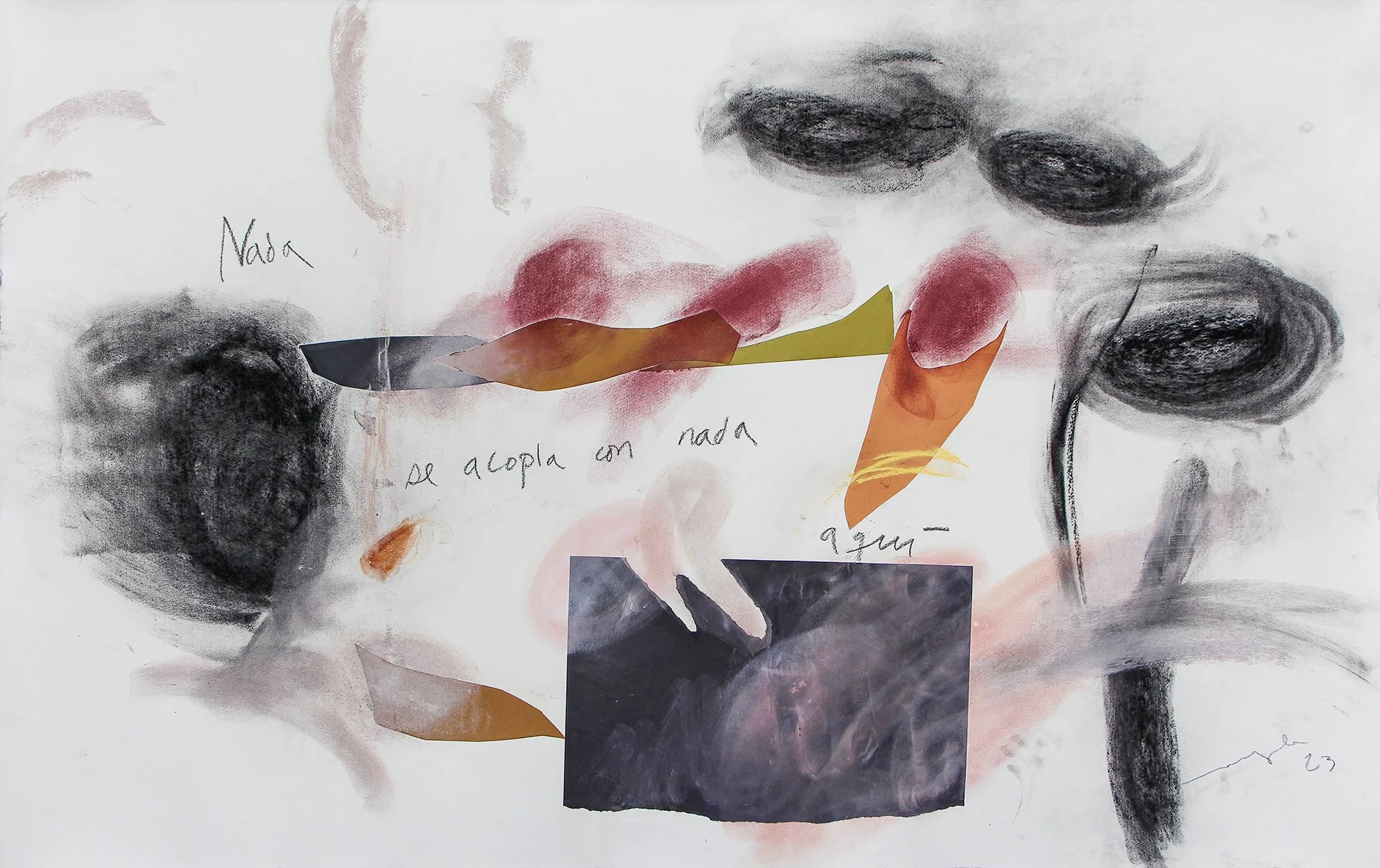
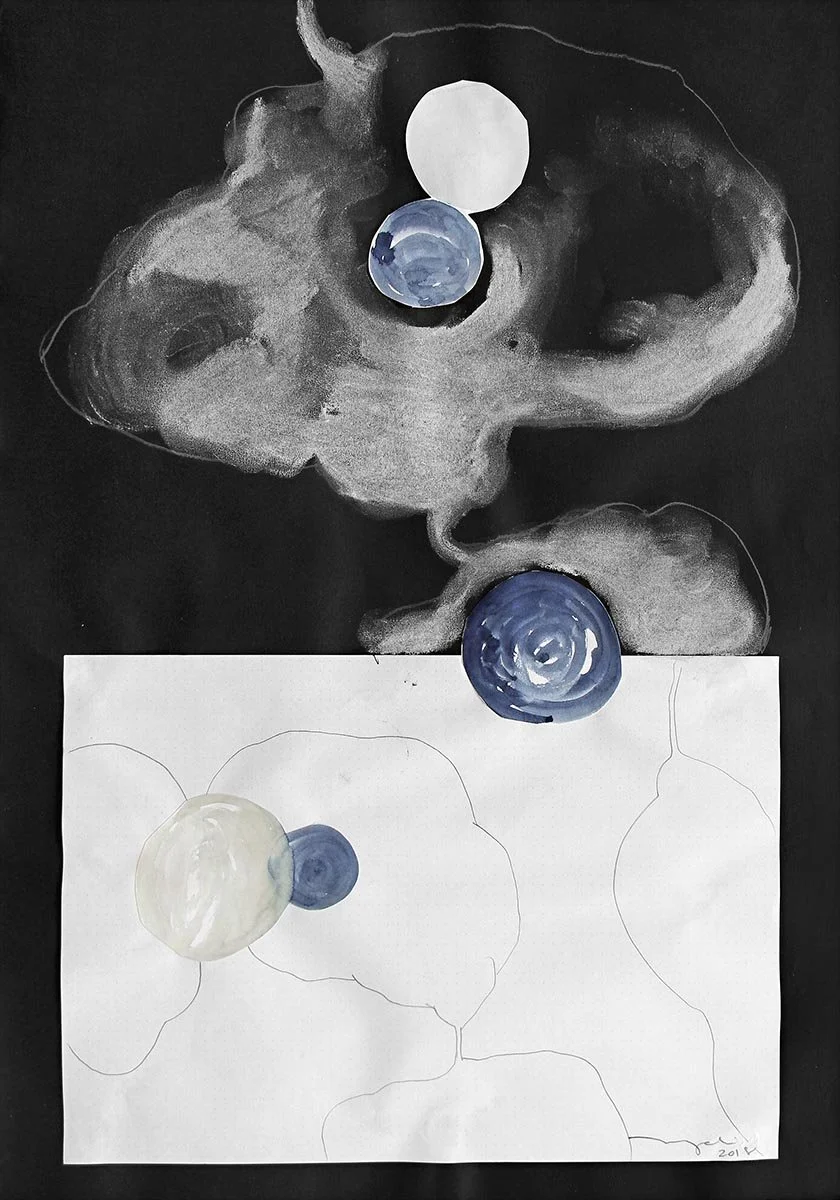
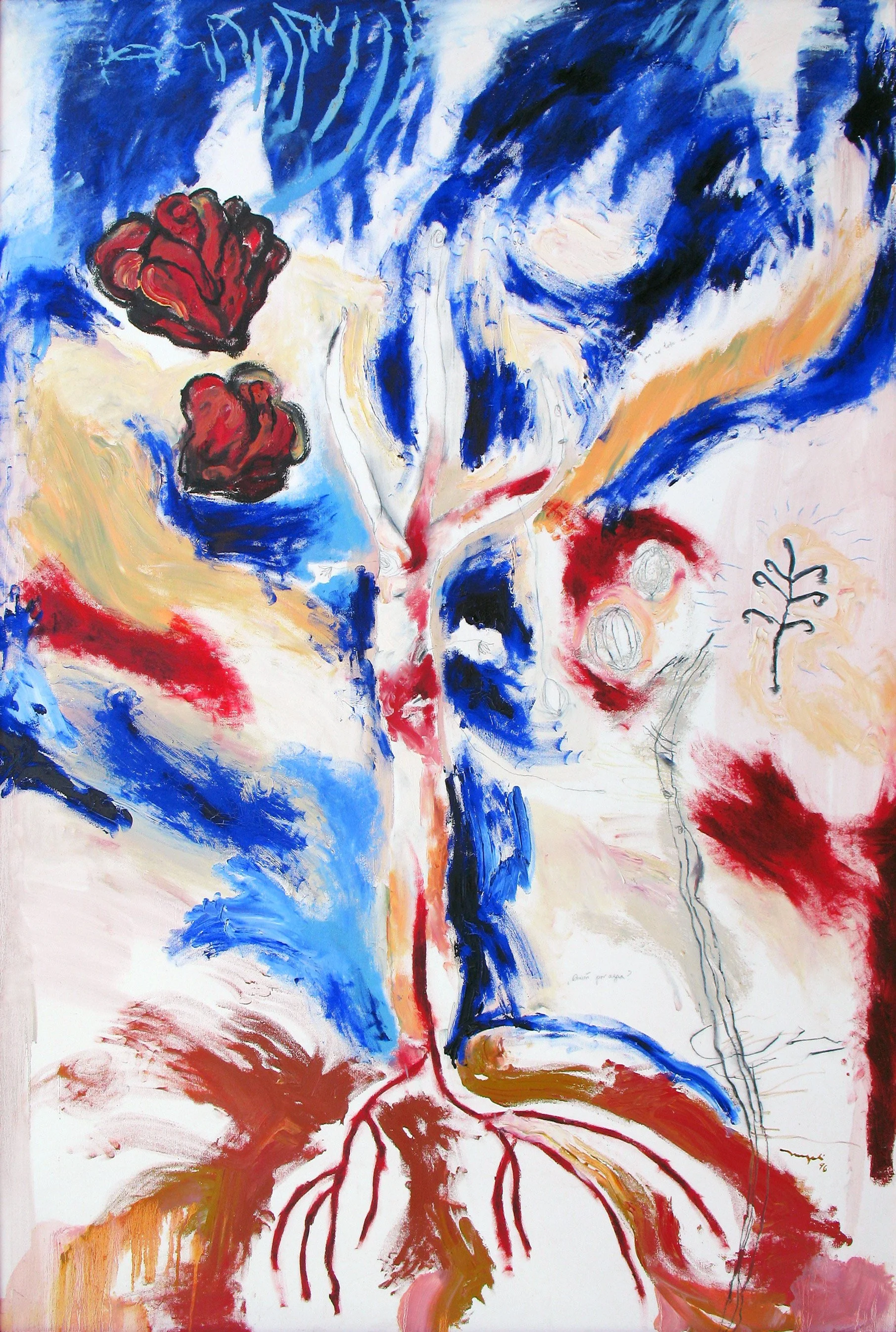
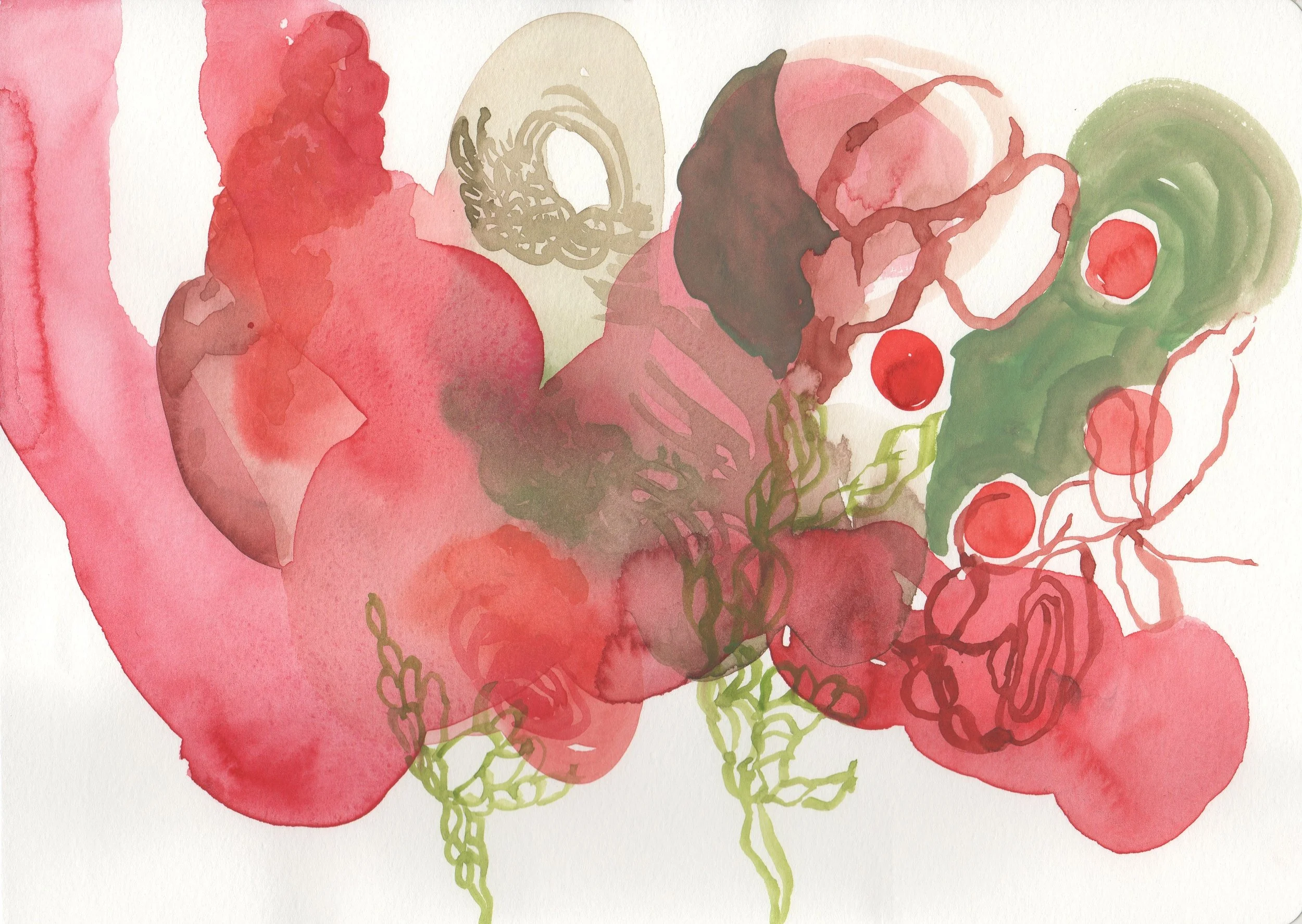
Images: ©️ Magali LaraOn November 10, 2025, the renowned Mexican artist Magali Lara delivered a talk at the Logan Center as part of Department of Visual Arts’ Open Practice Committee and her participation in this year’s MAKE Lit & Luz Festival. The talk was carefully structured around five recurring elements in her career: grid, text, landscape, gesture, and monsters. These elements are central to understanding Lara’s artistic practice across more than five decades.
Lara opened the talk by situating poetry at the center of her work. Although her practice includes painting, drawing, ceramics, tapestry, and animation, she described it as fundamentally conversational. This conversation, however, is not addressed outward at first; it unfolds internally, among conflicting voices. Images, she suggested, are more deceptive and sensuous than writing. They conceal as much as they reveal and resist full autobiographical disclosure. This framing set the tone for the talk, establishing each theme as a way of thinking through what images can do when language proves insufficient.
The first element Lara addressed was the grid. She traced her attraction to grids to comics and Latin American visual poetry, traditions in which rational structures are deliberately destabilized. Her own grids are uneven, stained, and temporary, often drawn quickly in charcoal. Lara linked this visual strategy to lived experience, noting that women’s perceptions and emotions are frequently forced into rigid frameworks that fail to accommodate them. In her work, the grid becomes a provisional support—one that holds contradiction and affect rather than suppressing them.
Text followed. Writing and drawing coexist throughout Lara’s practice, particularly in series such as Historias de Casa, which resemble comics but focus on domestic objects associated with femininity and women’s undervalued labor. These objects function as traces of intimacy and self-recognition. Text does not explain the images; instead, it interrupts and complicates them, reinforcing the sense of an ongoing internal dialogue.
Landscape marked a shift outward that remained deeply interior. Lara defined landscape as the relationship between the visible world and inner perception. Her early landscapes emerged from domestic spaces, where water and organic forms functioned as signals of unease or intuition. Later, shaped by loss, travel, and motherhood, trees and gardens became central motifs. Gardens, in particular, appeared as sites of attention and listening—spaces where small forms give rise to an expanded emotional register.
Gesture extended these concerns into the body. Lara described a lifelong search for a line capable of conveying fear, anxiety, or pleasure. Scale, repetition, and erasure became performative acts, especially in works related to caring for her mother during Alzheimer’s illness. These drawings prioritize experience over finished objects, foregrounding the expressive capacity of the body when words fail.
The final theme, the monster, brought the talk into her present explorations. Since 2012, Lara explained, her work has darkened in response to ecological crisis, grief, and global uncertainty. Monsters are not simply figures of fear or desire; they are shadows that demand recognition. In these works, all five elements converge: grids unravel, text falters, landscapes darken, gestures intensify, and monstrosity becomes a way of seeing otherwise.
We were thrilled to have Magali Lara at the Logan Center!
This event was presented in partnership with the Lit & Luz Festival, UNAM Chicago, and the University of Chicago’s Open Practice Committee in the Department of Visual Arts, and the Department of Art History. To learn more visit: https://dova.uchicago.edu/events/objects-landscape-and-other-stories-artist-talk-and-conversation-magali-lara
