

Year of Games Symposium: Critical Video Games Studies students respond to the weekend of events
Presenting partners include the Division of the Arts & Humanities, the University of Chicago Library, the Logan Center for the Arts, the Weston Game Lab, UChicago Career Advancement, and UChicago Arts with support from the University of Chicago Women’s Board and the Franke Institute for the Humanities
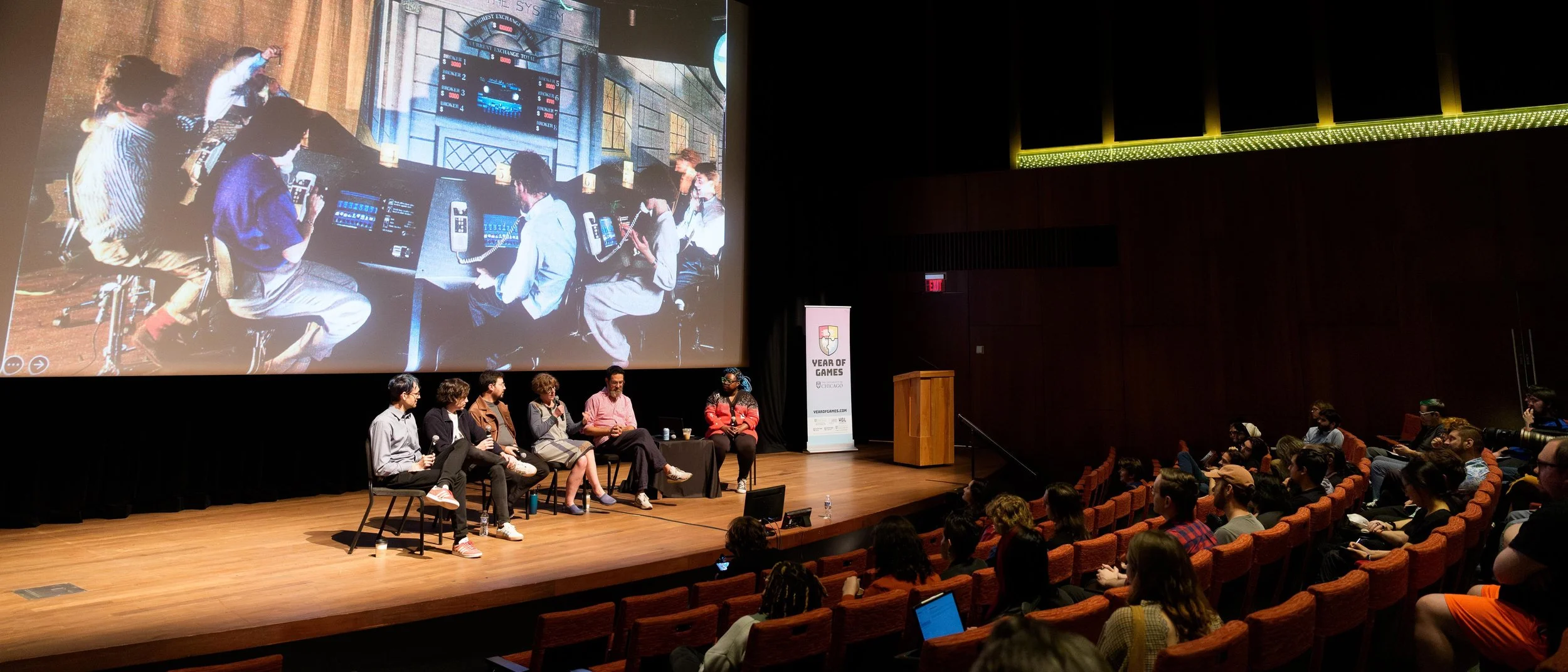
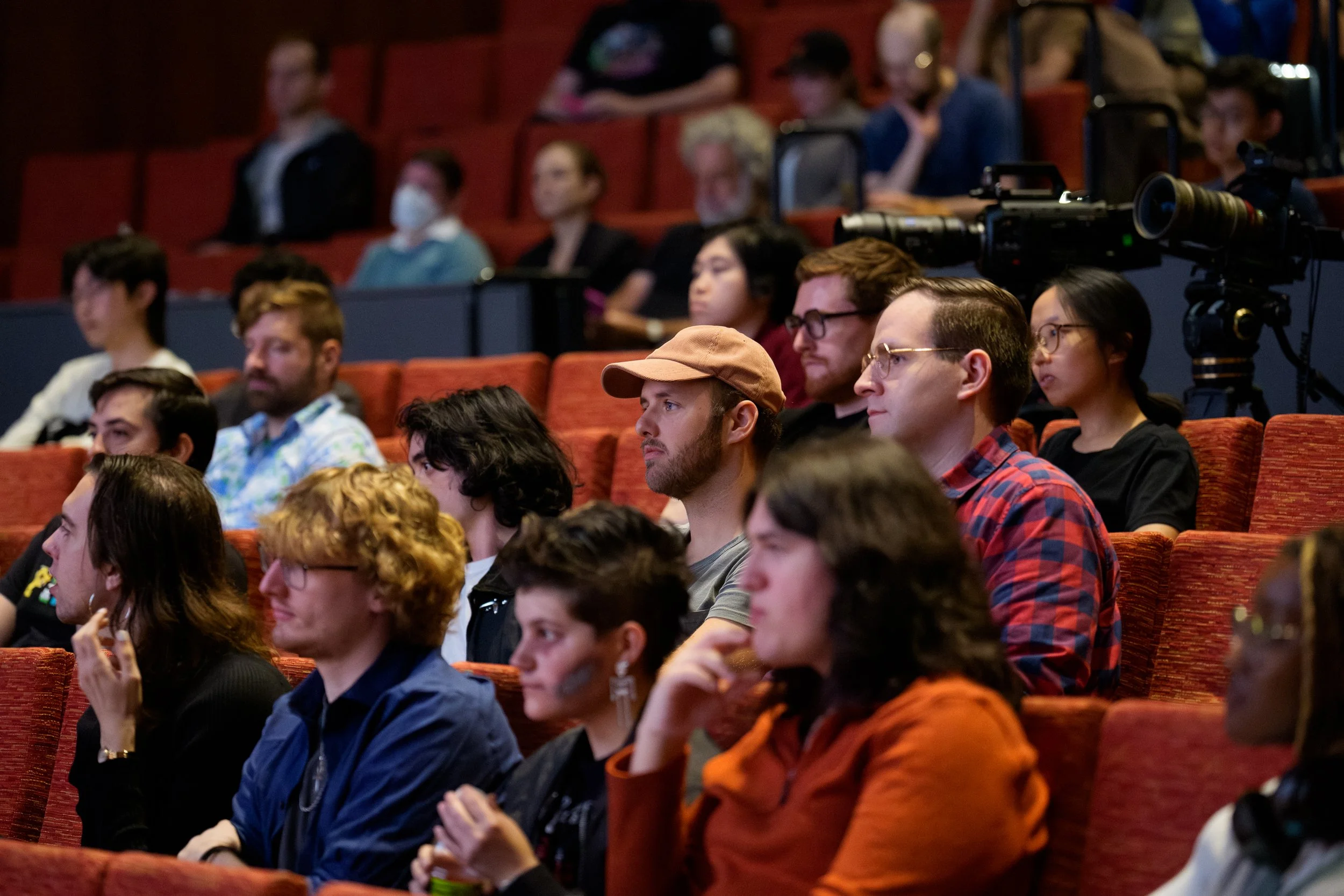
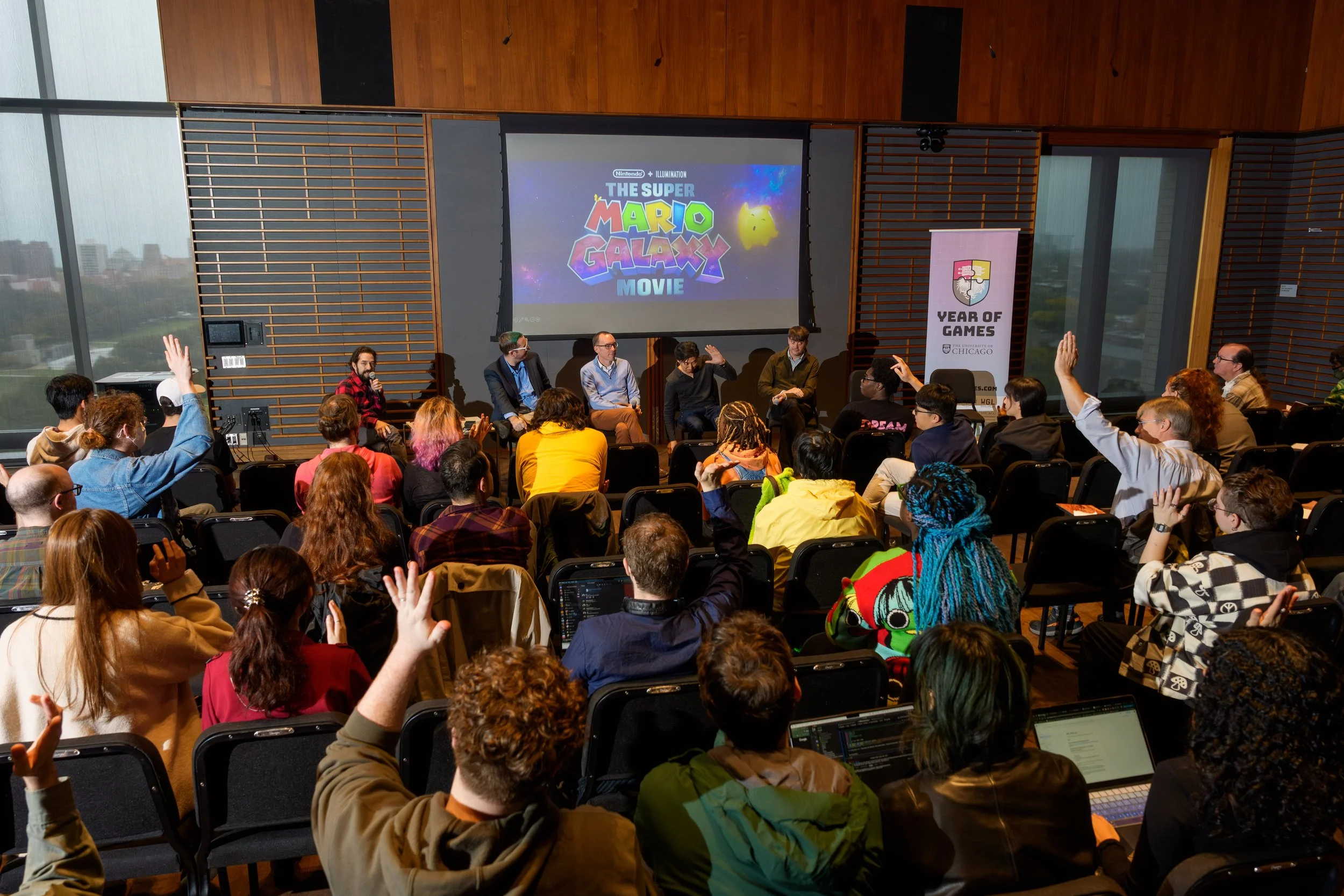
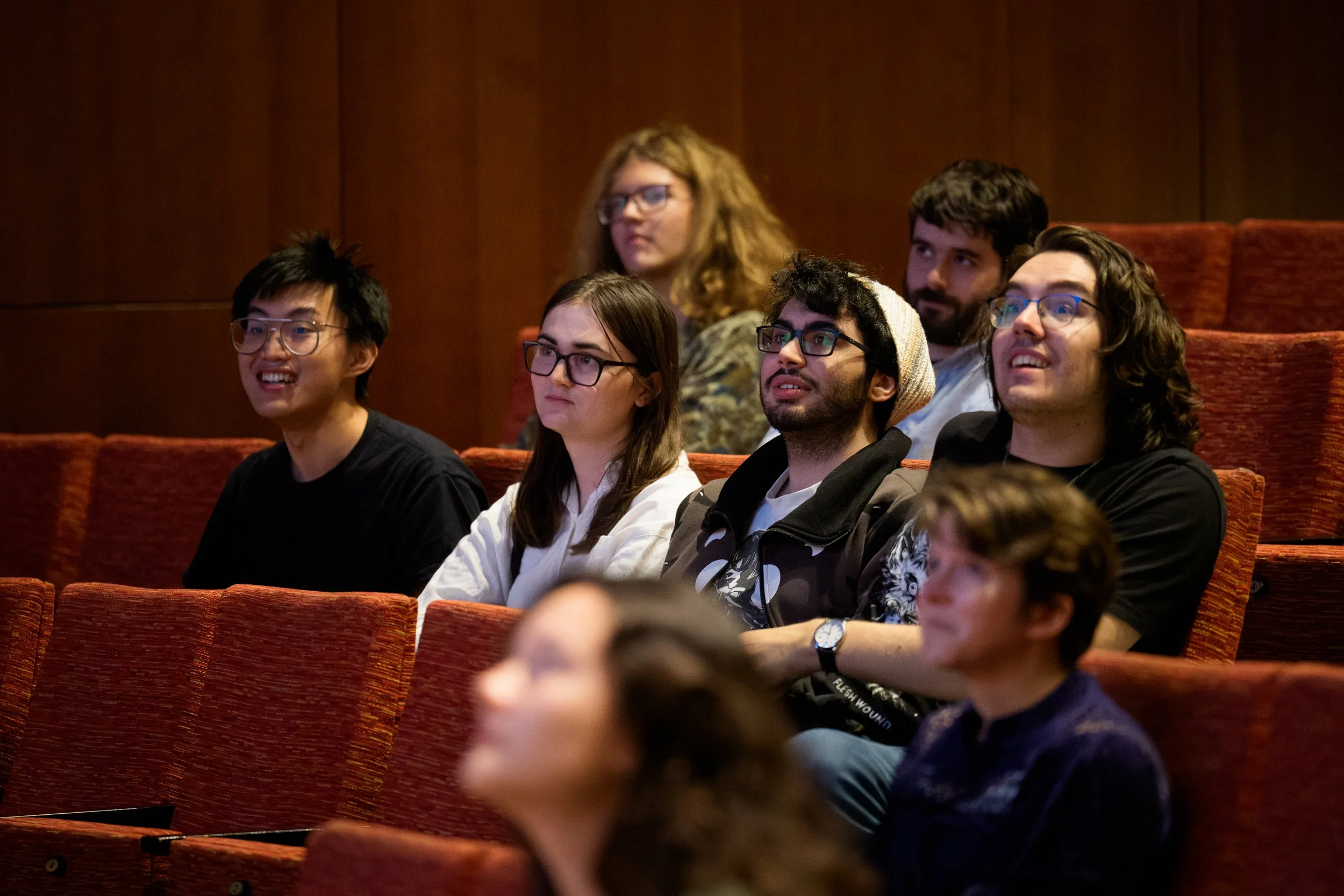
From October 17–19, the Logan Center for the Arts hosted the Year of Games Symposium, three days of game makers, writers, and educators in conversation about games, their past, present, and future, their place on campus. The symposium kicked off a university-wide initiative celebrating the vibrant culture of games and play at the University of Chicago and featured keynote speakers Evan Narcisse and UChicago alumnus, Alex Seropian.
Students in Critical Video Game Studies, taught by Ashlyn Sparrow — Senior Research Associate at the Weston Game Lab, a satellite partner of the Logan Center — attended the symposium and produced a series of blog posts reflecting on their experiences. Their writing captures the energy of the panels and the conversations that stayed with them after the events ended.
Scroll below to see snippets of their blogs and click to see the full posts:
YOG: A Glimpse into Music’s Underappreciated role in Games
by David Lee | October 26, 2025
“The Riot Games panel, held on Saturday morning as part of the Year of Games Symposium, offered a rare behind-the-scenes look at how large creative teams create large-scale productions and media.
Among the speakers, Annie De Brock stood out to me the most for her reflections on the animation process she employed during her work within DC’s Creature Commandos, and how an underappreciated aspect of animation plays a huge role in its creation, namely music.
Before the panel, I thought that the process behind animation worked in a straightforward linear way: the animators sketch the scenes on a storyboard, then the animators animate what’s on the storyboard board, and all the extra details like music and special effects are done in post-production. Annie completely changed all of that the moment she mentioned that, most of the time, you build animation and sequence it all around the music of a scene. This was evident in the scene she presented in the panel, which was a scene in Episode 3 of Creature Commandos, where G.I. Robot goes on a massive killing spree. All the aspects of the scene, the music, the gunshots, the absurdity of a G.I. Joe Robot killing Nazis, everything coalesces into a fun and wonderful piece of animated media. And it isn’t just one of those aspects taking the forefront, dominating the scene, and making the scene what it is; it’s all of them combining seamlessly into a singular, exciting, and grandiose whole.”
Gaming in the Academy- A Challenge Worth Taking?
by Ryan Anderson | October 21, 2025
“…What I have come to learn, especially after attending the Games + The Academy panel at the Year of Games Symposium, is that everyone who engages with games comes from a different viewpoint, a different set of prejudices, and a life of different experiences.
The speakers on the Games + The Academy panel gave me, more than anything, a new perspective on how differently people interact with the games they play and how that, in turn, influences the kind of academic work they produce. On the panel, there were representatives from various avenues of analysis, ranging from indigenous studies to artificial intelligence, all analyzing the same medium. ”

Challenging Play: Puzzles, Performance, and Practice panel at YoG Symposium. Photo: Aimee Stachowiak
Reflecting on Challenging Play: On How We Think, Feel, and Cooperate
By Aimee Stachowiak | October 20, 2025
“… The difficulty in how we think was one such form that stood out to me from this panel. Yoko Taro created Nier Replicant in response to 9/11, and the subsequent actions and violence that followed it. Perhaps the most famous quote of his when discussing the creation of Nier Replicant was, “The vibe I was getting from society was: you don’t have to be insane to kill someone. You just have to think you’re right.” In a game like Nier Replicant, a player is asked to complete the game by acting intentionally immorally. They are given two sides of a conflict, but are required to be blind to one. Instead of telling a player their actions are entirely right or wrong, Nier Replicant simply asks a player to engage with their own moral judgments by forcing a player to be self-conscious of their participation in enacting prejudiced violence.”
Challenging Play: What’s Fair is Fair! …Maybe?
By Wren Vela | October 26, 2025
“One of the biggest things the panelists discussed was about how often intentional challenges in games are created by establishing rules and then breaking them with the game design, effectively subverting the expectations of the players. This is not always the case, though. Many games are simply made difficult to understand by having complicated, yet established, rulesets (like Everdell), which would still fall under the category of “challenging games.” This idea of challenge also showcases the fact that what is ‘difficult’ or ‘fun’ is entirely player dependent.
Oftentimes, games will have Difficulty Settings so players can curate their experiences to fit what they want the gameplay to feel like. In Minecraft, you have 4 difficulty options to choose from, more than that if you count Creative and Survival Mode as their own difficulty, each with their own perks and their own downsides. This curation of the player experience is how ‘fun’ is dictated in the game world, and as Celia Pearce points out, ‘fun’ means very different things to different people. While I love playing Minecraft, some people find the game to be boring and would much rather play a shooting game like Call of Duty, which is not my personal cup of tea. If I were to try to play Call of Duty against someone who knew every map and which gun was the best, I would absolutely lose. The same thing would happen if someone who stopped playing Minecraft when they were 8 raced me in parkour; they would lose. Sure I can have fun, and they can have fun, but this really all boils down to skill and how difficult someone finds a game. Is this even really fair?”
When Silence Plays Back: Rethinking Sound, Power, and Feeling in Games
By Jihu Park | October 22, 2025
“At The Year of Games Kick-Off Symposium at the University of Chicago, the “Sound, Music, Play” panel explored how sound shapes emotion and play. Sound is usually the last thing we notice in games, which is exactly why it matters. What happens when we start paying attention?
Midway through the Sound, Music, Play panel at the Year of Games Symposium, Joanna Fang, an Emmy-winning Foley artist at Sony, asked the entire audience to shake hands with their neighbors. The room rustled for a second, then went still. “That was the quietest thing I’ve ever heard,” she said, before demonstrating how that same handshake transforms on screen. A sharp clap, a faint rub, a slow release.
It was a moment that captured the entire session’s tension: the gap between authentic silence and constructed silence.”
replica, the academy, and the plight of the real gamer (pt. 2)
By Mack Minter | October 20, 2025
“…during the “games + the academy” panel, d. fox harrell said the following:
‘there’s a weird distinction between “gamers” and “non-gamers” that doesn’t really exist in other kinds of art. like, you don’t say music-ers and non-music-ers, you just say, “what kind of music do you like?’
the entire panel was maybe my favorite of the entire symposium, but it really made me reflect on the question of why we study games (in academia); and further, why am i studying games? why do people who play games, maybe more than any other hobby, feel the need to so surgically define the in-ground and the out-group? how come all the games i like don’t count as “real” games (see part one of this series)?”